 SEAL CONNECT
 Mechanical seal overheating is one of the most common—and misunderstood—causes of premature seal failure.
At first glance, it seems straightforward: temperatures rise, materials degrade, and the seal fails.
But in real-world applications, overheating is rarely the root cause. It’s the result of a breakdown happening at the seal face interface, often long before operators notice any visible leakage.
Understanding what actually happens inside a seal when it overheats is critical if you want to reduce downtime, extend seal life, and improve overall equipment reliability.
What Causes Mechanical Seal Overheating?
A mechanical seal doesn’t fail simply because it exceeds a temperature rating. It fails because it loses the ability to manage heat at the sealing interface.
That heat is generated at the seal faces—where two precision-machined surfaces rotate against each other under pressure.
Under normal conditions, a thin fluid film separates those faces and provides:
- Lubrication
- Cooling
- Wear protection
When that film is disrupted, overheating begins.
Stage 1: Loss of Lubrication at the Seal Faces
The first step toward overheating is almost always a breakdown in lubrication.
This can happen due to:
- Inadequate flush or cooling (see API environmental controls)
- Dry running or low-flow conditions
- Flashing or vaporization at the seal faces
- Air ingress into the seal chamber
- Abrasives disrupting the fluid film
In slurry and solids-handling applications, this issue is amplified.
Even a brief interruption in flush flow allows abrasives to reach the seal faces. Once that happens, the fluid film collapses and wear begins immediately.
Learn more about sealing in difficult services:
https://www.sepco.com/blog/sealing-solutions-for-abrasive-slurry-applications/
Stage 2: Friction Increases and Heat Builds Rapidly
Once lubrication is lost, friction increases significantly.
Instead of operating on a fluid film, the seal faces begin making direct contact. This creates:
- Localized hot spots
- Rapid temperature spikes
- Accelerated wear
This is where overheating becomes self-reinforcing:
More friction → more heat → less lubrication → more friction
At this stage, seal face temperatures can exceed the process temperature by a wide margin—even if the system appears to be operating within acceptable limits.
Stage 3: Thermal Distortion of Seal Faces
As heat builds, the seal faces begin to deform.
Even microscopic distortion can cause major problems:
- Loss of flatness
- Uneven contact pressure
- Increased leakage paths
Mechanical seals rely on extremely flat surfaces to maintain sealing integrity. Once distortion begins, stable operation is no longer possible.
Stage 4: Material Breakdown Begins
With extended time and elevated temperatures, individual components begin to degrade.
Elastomers (O-rings and gaskets) “Taking A Set”
- Harden and lose elasticity
- Crack
- Lose sealing capability
Seal Faces (Carbon, Silicon Carbide, Tungsten Carbide)
- Carbon faces may blister or wear rapidly
- Faces can fracture under thermal stress
- Surface finish degrades, increasing friction
Metal Components
- Springs lose tension
- Hardware can distort
- Elevated temperatures accelerate corrosion
For more on material selection:
https://www.sepco.com/blog/mechanical-seal-material-selection/
Stage 5: System Conditions Make It Worse
Overheating rarely occurs in isolation.
Many applications experiencing seal failure are also dealing with:
- Misalignment
- Shaft deflection or runout
- Excessive vibration
- Soft foot conditions
These issues introduce movement at the seal faces, which:
- Disrupts lubrication
- Increases contact stress
- Accelerates heat generation
In other words, overheating is often a symptom of broader system instability.
Explore common failure drivers:
https://www.sepco.com/blog/what-causes-mechanical-seal-failure/
Stage 6: Leakage and Seal Failure
By the time overheating reaches this stage, failure is inevitable.
Typical signs include:
- Visible leakage
- Burned elastomers
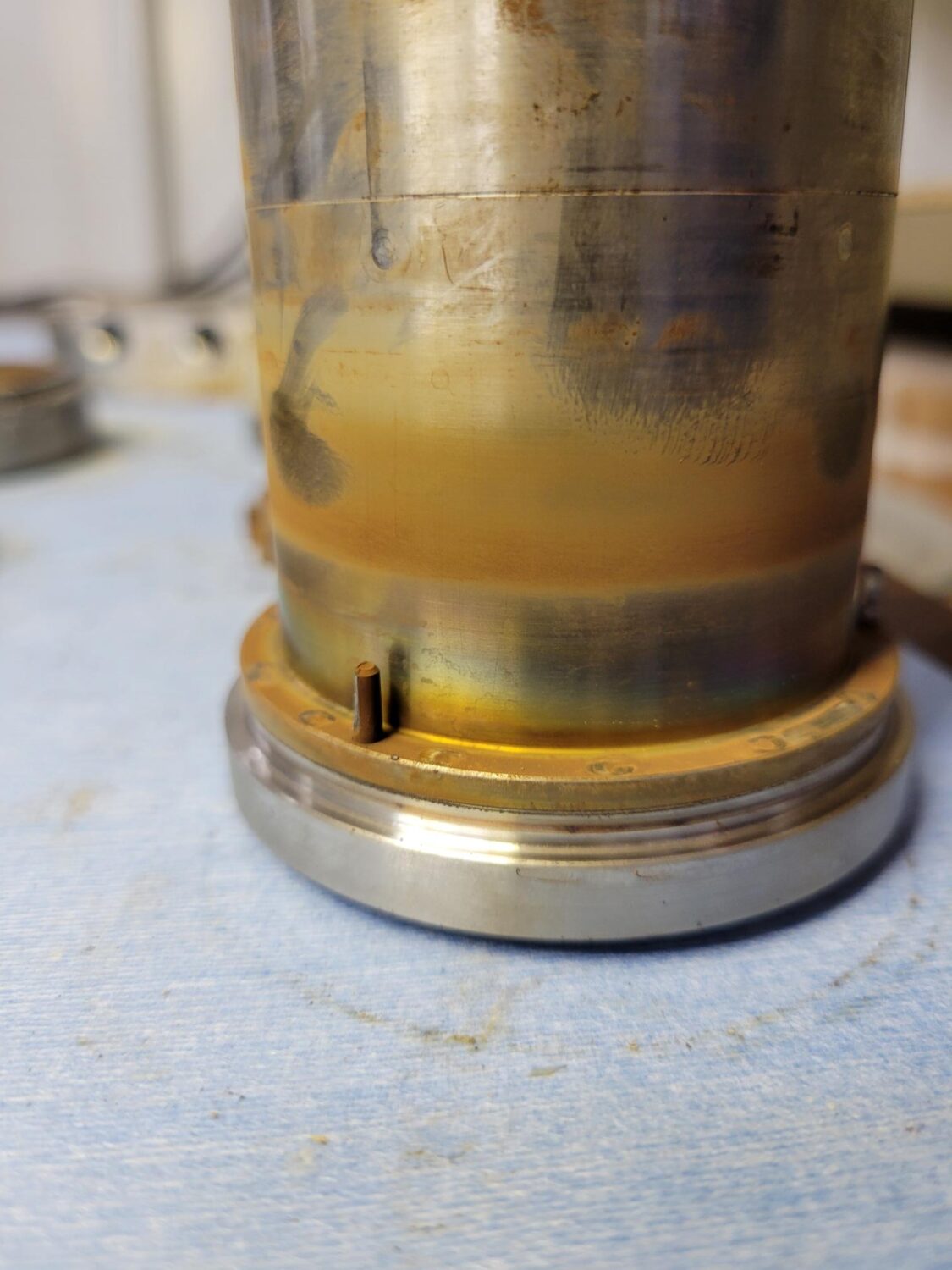
- Discoloration of components
- Scored or cracked seal faces
At this point, the seal has lost:
- Lubrication
- Geometry
- Material integrity
Replacement is the only solution.
Why Mechanical Seals Fail Below Their Temperature Rating
One of the most dangerous assumptions in sealing is this:
“If the process temperature is below the seal’s rating, the seal should perform.”
In reality, temperature ratings are based on:
- Ideal lubrication conditions
- Proper installation
- Stable operating environments
They do not account for:
- Flush interruptions
- Misalignment or vibration
- Process upsets
That’s why a seal rated for 400°F can fail at 250°F—or even lower—if lubrication breaks down.
Related insight:
https://www.sepco.com/blog/mechanical-seal-temperature-rating/
How to Prevent Mechanical Seal Overheating
Preventing overheating requires focusing on the system—not just the seal.
- Ensure Reliable Flush and Cooling
- Maintain consistent flow
- Monitor pressure differentials
- Avoid clogged or undersized orifices
- Control Shaft Movement
- Correct misalignment
- Reduce vibration
- Address soft foot and installation issues
- Design for Real-World Conditions
Seals don’t fail under steady-state conditions—they fail during:
- Startup and shutdown
- Process upsets
- Transient events
Designing for worst-case scenarios is critical to long-term reliability.
Final Thoughts: Heat Is the Symptom, Not the Cause
Mechanical seal overheating is not a single failure event. It’s a chain reaction:
- Loss of lubrication
- Increased friction
- Heat generation
- Thermal distortion
- Material breakdown
- Leakage
And by the time you see it, the damage is already done.
If your operation is experiencing repeated seal failures, the answer isn’t just a higher temperature rating—it’s a better understanding of what’s happening inside the seal.
Need Help Solving a Seal Overheating Issue?
If you’re dealing with:
- Chronic seal failures
- Abrasive or slurry applications
- Dry-running or inconsistent lubrication
SEPCO’s engineering team can help evaluate your system and recommend a solution built for real operating conditions.
Contact SEPCO:
https://www.sepco.com/contact/
 Find Your Sealing Solution