 SEAL CONNECT
 Spend enough time repacking valves and you develop a strong opinion about how they ought to be sealed — and then the next application talks you right back out of it. That’s the honest truth about stem sealing: there’s rarely one right answer. Every valve has to be sealed where the stem passes through the body, and the two approaches we reach for most — traditional compression packing and precision-machined high-performance plastics — solve that problem in very different ways. Pick the right one and you save money, downtime, or both. Pick the wrong one and you’ll be back at that valve sooner than you’d like. Here’s how we think it through.
What Is Valve Packing?
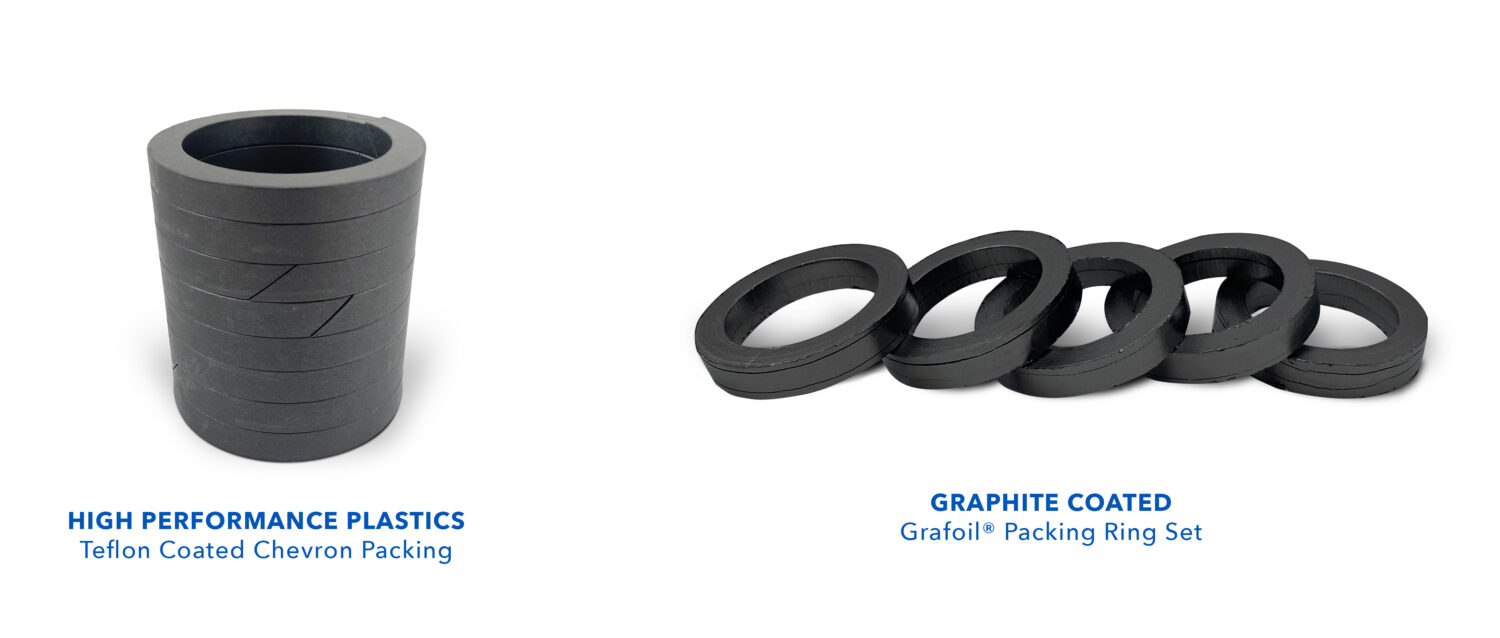
Valve packing is the time-tested approach: rings of fibrous material compressed around the valve stem to form a seal. Tightening the gland squeezes those rings against the stem and the stuffing box walls, containing the process fluid. The materials are usually flax, graphite, PTFE, or aramid, often carrying lubricants or blocking agents to help them seal and slide.
We still specify packing constantly, because for a huge share of valves it’s simply the right tool. It’s economical, it’s forgiving, and it’s especially at home on older valve designs and on valves that see regular stem movement — think gate and globe valves cycling day in and day out. The thing to remember is that packing is a consumable. It compresses and relaxes over time, so it needs occasional re-tightening and, eventually, replacement. And it has a ceiling: push conventional packing into very high temperatures or aggressive chemistry and it’ll let you know.
What Are High-Performance Plastic Seals?
The other route uses engineered polymers — PEEK, PTFE, PVDF, PPS — machined to tight tolerances so the seal fits the exact conditions it’ll face. Instead of relying on compressed fibers you keep adjusting, you’re installing a precision component built to spec.
This is where we lean when the service gets nasty or the maintenance window disappears. High-performance plastics take a much wider range of temperatures, pressures, and chemicals in stride, and they deliver long service life with very little fuss in the right application. That’s the payoff for a higher price tag up front — and in the right spot, it’s well worth it.
Which One Costs More? It Depends How You Count
Here’s the trade-off that actually drives the decision. Packing is cheaper to buy and install, but it can cost more over its life once you tally up the adjustments, the replacements, and the labor behind every one of them. High-performance plastics cost more at purchase but can lower total cost by taking maintenance out of the picture — which matters most on the valves that are expensive, dangerous, or just plain miserable to get to. In our experience, the crews that get burned are the ones that only look at the sticker price and forget who’s going to be standing at that valve with a wrench next quarter.
| Criteria | Valve Packing | High-Performance Plastics |
| Material | Fibrous — flax, graphite, PTFE, or aramid, often with lubricants/blocking agents | Engineered polymers — PEEK, PTFE, PVDF, PPS |
| Sealing mechanism | Compressed rings around the stem | Precision-machined seals built to tight tolerances |
| Best for | Older valve designs; valves with regular stem movement (gate, globe) | Modern valves; extreme conditions; low-maintenance needs |
| Maintenance | Periodic tightening or replacement | Extended service life, minimal upkeep |
| Performance limits | Reliable broadly, but strained by extreme heat or aggressive chemicals | Handles a wider temperature, pressure, and chemical range |
| Cost | Lower up front, higher lifecycle | Higher up front, lower lifecycle |
How Do You Choose Between Them?
There’s no universally better option — only the better fit for the valve in front of you. We weigh three things every time: the real operating conditions (temperature, pressure, and what’s actually flowing through), the up-front budget, and the honest long-term maintenance expectation. A frequently cycled valve in moderate service is often perfectly happy on quality compression packing. A valve on an aggressive chemical — or one you’d rather not touch for years — usually earns the higher cost of a high-performance plastic seal.
Frequently Asked Questions
Is valve packing or plastic better for high temperatures and harsh chemicals? High-performance plastics generally win here. Engineered polymers like PEEK and PVDF handle a broader range of temperatures, pressures, and aggressive chemicals than most conventional packing, which can degrade under those extremes.
Why is valve packing still so widely used? Because it’s economical, forgiving, and well suited to older valve designs and valves with regular stem movement like gate and globe valves. For a large share of general service, it’s the sensible, cost-effective choice.
Do high-performance plastic seals really save money if they cost more? Often, yes — over the full lifecycle. The higher purchase price can be offset by longer service life and far less maintenance, especially on valves that are costly, hazardous, or hard to access.
What should drive the decision? Operating conditions, up-front budget, and expected maintenance. Match the seal to the real service rather than defaulting to whichever is cheaper on the shelf.
The Bottom Line
Both valve packing and high-performance plastics seal valves well; they just answer different problems. Packing is the economical, proven workhorse for routine service and moving stems. High-performance plastics are the low-maintenance specialists for extreme conditions and hard-to-service valves. Weigh the conditions, the budget, and the maintenance reality — and when the call isn’t obvious, talk it through with a sealing specialist before you commit. That short conversation is a lot cheaper than the wrong seal.
 Find Your Sealing Solution