 SEAL CONNECT
Plant Equipment Survey: The First Step to a Sealing Reliability Program
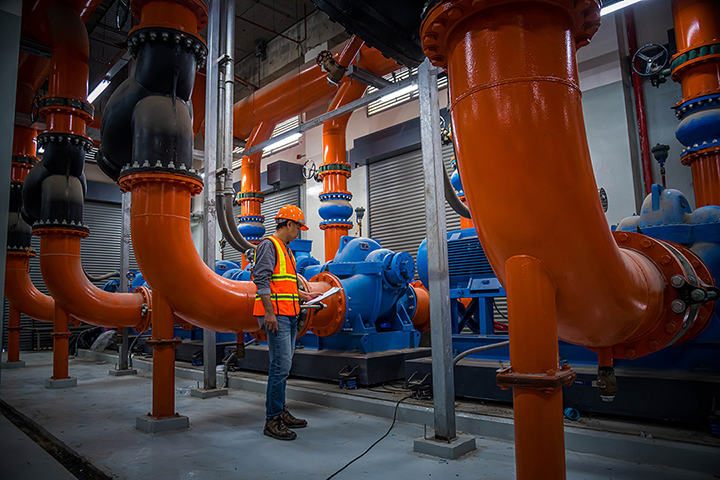 We’ve walked a lot of plants over the years, and the conversation almost always starts the same way. We’ll ask a maintenance lead which pumps give them the most trouble, and we’ll get a confident answer — the unit by the north wall, the one that always lets go right before a long weekend, the seal the night shift won’t stop complaining about. Good instincts, every time. But when we ask how many pumps are in the plant, what’s sealing each one, or how often a given seal actually fails, the room tends to go quiet. The answers live in someone’s memory, a stack of spreadsheets, and a nameplate nobody can read anymore.
That gap — between what a team feels about its equipment and what it can prove — is exactly what a plant equipment survey closes. And for most facilities, it’s the highest-value thing you can do before spending another dollar on parts.
What Is a Plant Equipment Survey?
A plant equipment survey is a systematic, on-site inventory and assessment of every sealing-critical piece of rotating equipment in your facility — each pump, seal, and packed valve is identified, documented, tagged, and tracked so you know exactly what you have, where it is, how it’s configured, and how it’s performing.
That’s the short answer. The longer answer is that a good survey replaces tribal knowledge with a single, accurate, digital record of your equipment population — the foundation every reliability decision downstream depends on.
In practice, a SEPCO sealing solutions expert walks the plant and captures the details that actually drive sealing performance. From that point on, the equipment stops being a mystery and starts being manageable.
What Does a Plant Equipment Survey Include?
Anyone can count assets. A survey worth the walk documents the operating reality of each application so the right sealing solution can be matched to it. Expect it to capture:
- Equipment identification and location — every unit tagged and barcoded for tracking
- Physical configuration — shaft size, stuffing box dimensions, and the current sealing arrangement
- Process conditions — the fluid, temperature, pressure, and shaft speed the seal has to survive
- Current products and performance — what’s installed now and how well it’s actually holding up
- Flush water and utility usage — the quiet, continuous waste most plants never think to measure
That last item surprises people. Continuous seal flush and cooling water looks trivial on one pump. Multiply it across a few hundred units running 24/7 and it becomes real gallons and real dollars. A survey is usually where that waste becomes visible for the first time — and where a follow-on water utilization study starts paying for itself.
Why Does Your Plant Need One?
After decades around stuffing boxes, we can tell you the plants that run well aren’t the ones with the fanciest seals. They’re the ones that know their equipment cold. Here’s what a survey gives you.
A single source of truth. No more guessing at a shaft size or ordering the wrong ring set at 2 a.m. The record is accurate, centralized, and there when you need it.
Bad actors exposed by data, not anecdote. When every asset is tracked, repeat failures stop hiding as one-off complaints and start showing up as patterns. That’s how you send engineering effort where it’ll actually move the needle — and how chronic problem equipment gets re-engineered or replaced instead of endlessly rebuilt.
A move from reactive to predictive. Once you know the wear rate on your consumable parts and track it, you plan replacements around scheduled shutdowns instead of scrambling after a failure. That single shift is where the downtime and overtime costs come out.
The right product in the right application. Surveys constantly turn up mismatches — general-service packing fighting an abrasive slurry, a seal battling conditions it was never designed for. Correcting those is often the fastest reliability win on the table. (If you’re not sure what belongs where, that’s what engineering and design support is for.)
Leaner inventory. Knowing your true equipment population lets you standardize and stock what you’ll actually use — instead of tying up cash in a storeroom full of one-off spares.
Water and energy savings. Because the survey flags excess flush and cooling, it routinely opens the door to lower utility costs and a smaller environmental footprint — a plant-level priority now, not just a maintenance one.
How Does a Survey Become an Ongoing Reliability Program?
A survey is powerful as a snapshot. It’s transformative as the first step of a managed program. At SEPCO, the survey feeds the Sealing Application Management System (SAMS): the tagged, tracked equipment data drives product recommendations, hands-on installation and operation training, predictive-maintenance guidance based on known wear rates, and failure-analysis tracking so underperformers get corrected instead of repeated.
We can stand the program up in about 30 days for a plant of any size, and it doesn’t end at setup — a SEPCO team member delivers quarterly reviews that report on equipment performance and documented cost savings, then hunts for the next efficiency opportunity. That’s what turns a one-time snapshot into a continuous-improvement loop.
Frequently Asked Questions
How long does a plant equipment survey take? The survey itself scales with plant size, and SEPCO can have the full tracking program set up within roughly 30 days for a facility of any size.
What equipment gets included? Any sealing-critical rotating equipment — centrifugal and positive-displacement pumps, packed valves, mixers, agitators, and similar assets. Each is tagged, documented, and entered into the tracking system.
Is a survey only useful for big plants? No. Small and mid-size plants often see the fastest payback because a handful of chronic bad actors can represent a large share of their total maintenance spend.
What happens after the survey? The data becomes the baseline for a reliability program — product standardization, predictive maintenance, training, and sealing failure analysis — so improvements can be measured against a known starting point.
 Find Your Sealing Solution